UTAGE modern taiko show
Taiko, shamisen, shakuhachi and shinobue set against electronic music, in a show next to Kaiyukan. Cancel free up to 24 hours before.
See dates and seats ↗
Modern taiko show · Tempozan, Osaka
Taiko, shamisen, shakuhachi and shinobue meet electronic music in a 45-minute show beside Osaka Bay.
Guests are invited up to play, and reviewers say the 45 minutes fly by.
The show in four facts
Old instruments, new volume
Taiko are Japanese drums, and evidence of them in Japan goes back to the 6th century. They marked festivals, shrine rituals and battle orders for centuries. The ensemble style you see on stage, kumi-daiko, took shape in the early 1950s.
The line-up also names the shamisen, a plucked instrument with three strings, the shakuhachi, an end-blown bamboo flute, and the shinobue, a high-pitched bamboo flute from festival and theatre music. Each has its own tradition.
Taiko has long met other music. Kodo, the best-known touring ensemble, lists a collaboration with the virtual singer Hatsune Miku and a main-stage slot at a rock festival, and shamisen players have taken tsugaru style into jazz and rock.
Reviewers describe a show that welcomes newcomers, with English support and an audience pulled into the music. You do not need to know a drum from a flute beforehand.
What you will hear
Six sounds to listen for, in the language of the instruments. The running order changes with the show, so read it as a map of the sound rather than a set list.
Taiko are barrel-shaped drums with skin stretched over both ends. The largest, the ō-daiko, gives a steady pulse beneath the other parts, and its low note is the one guests say they feel in the chest.
Smaller shime-daiko are tunable and set or change the tempo, and one of them often plays the base rhythm that holds the group together. The sticks are called bachi.
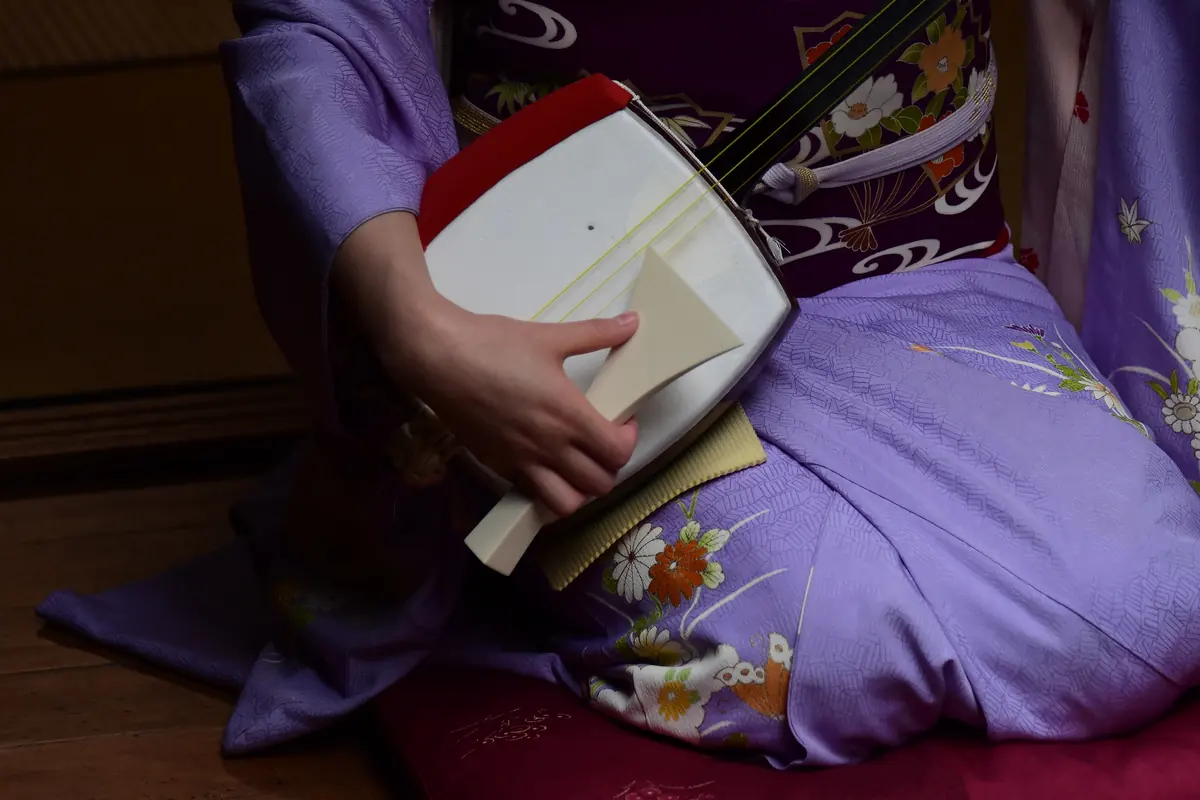
The shamisen has three strings and a drum-like body covered in skin, and it is plucked with a plectrum. Its lowest string is laid to buzz, a sound called sawari. In tsugaru style it has been played in jazz and rock.
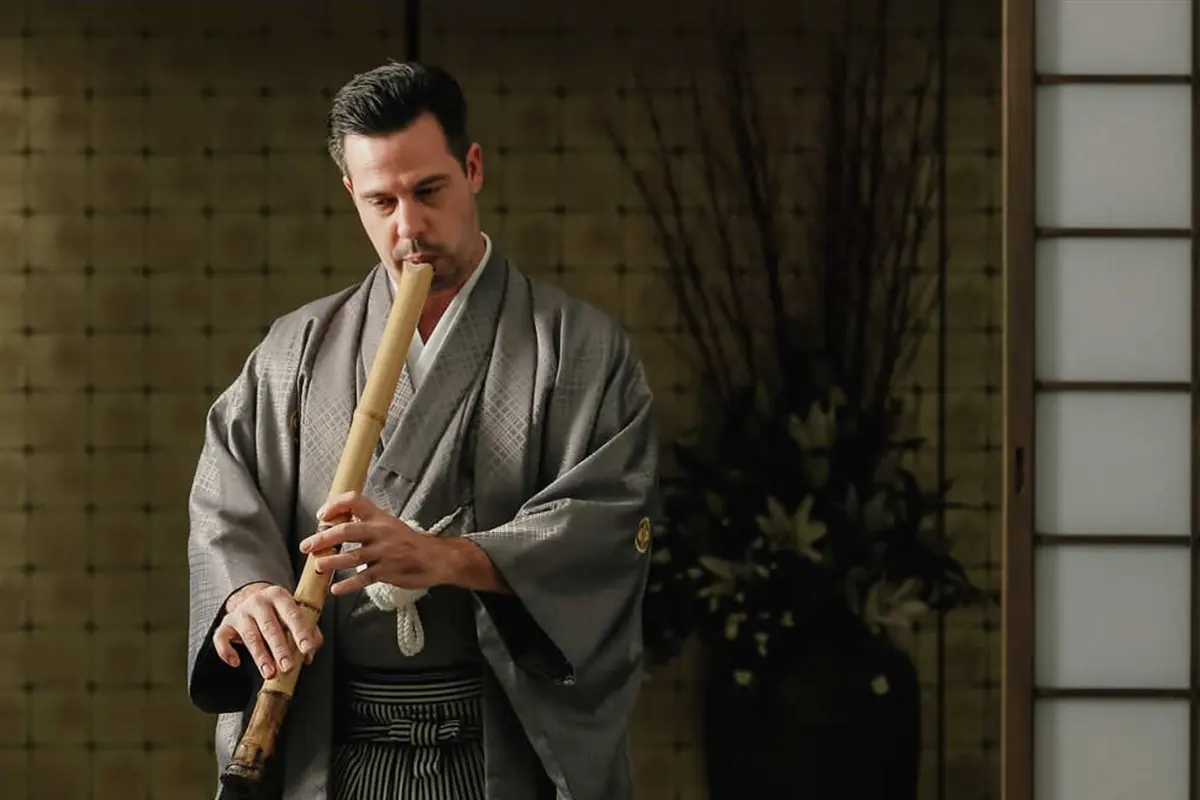
The shakuhachi is an end-blown bamboo flute whose pitch can bend a long way with the player's breath. The shinobue is a high-pitched transverse bamboo flute heard in festival music and in kabuki and noh.
Computer-made music runs alongside the acoustic instruments, with visual effects and staging that make the room part of the show. This is the layer that sets it apart from a classical taiko concert.
Guests can be invited up to try Japanese instruments and join one song for a limited time. Whether that happens on your night is up to the show.
Which pieces are played, and when guests are invited up, is decided by the show on the night.
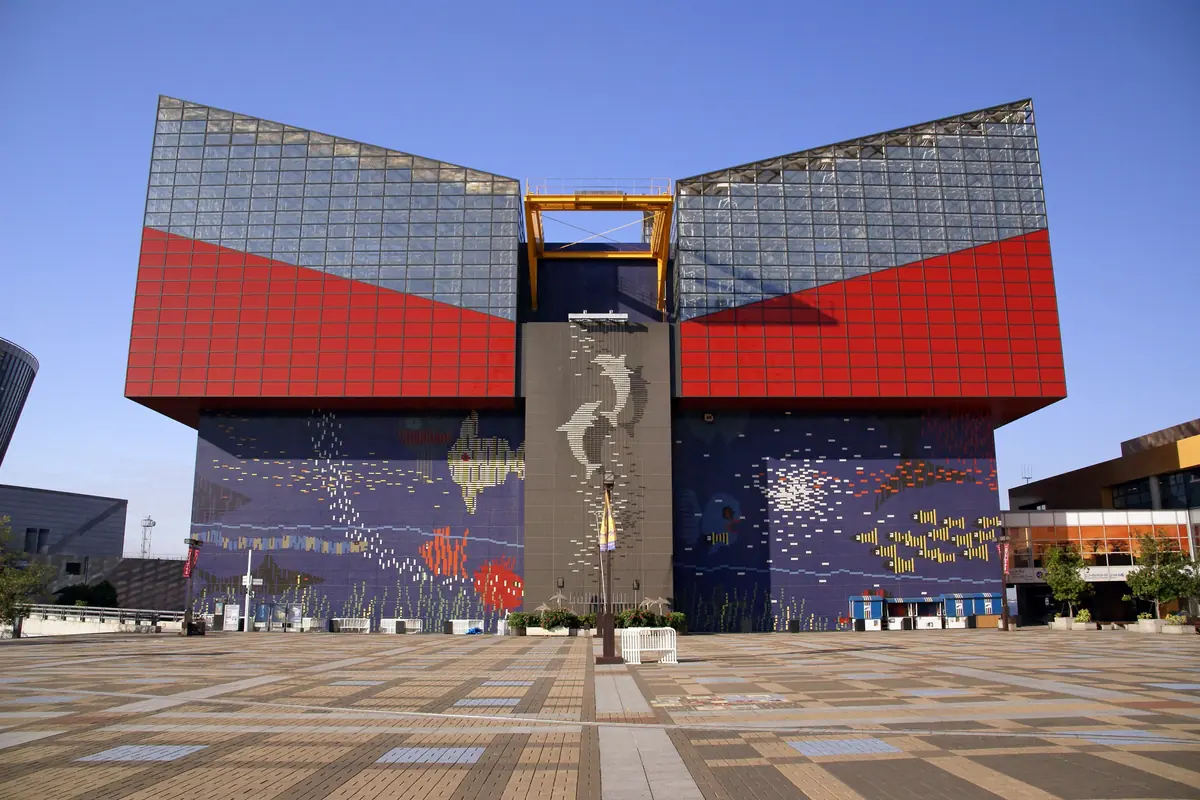
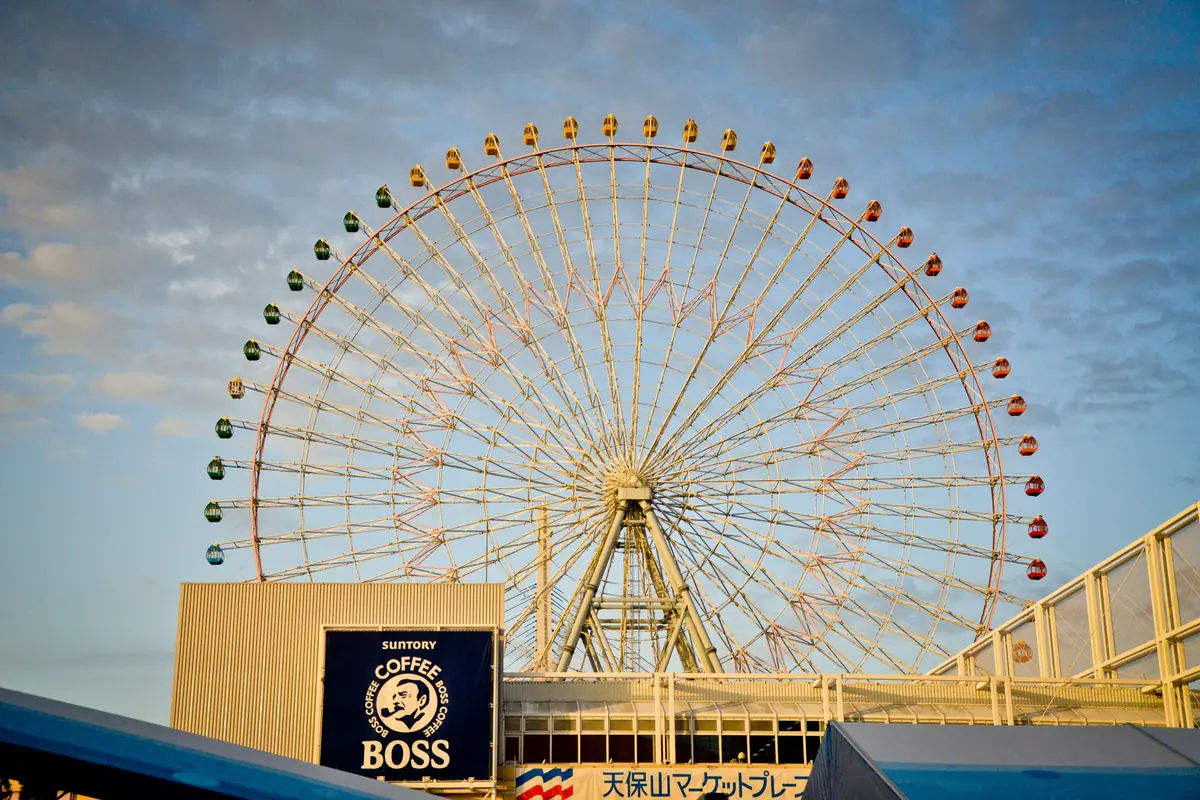
Drums, strings, bamboo and the bay
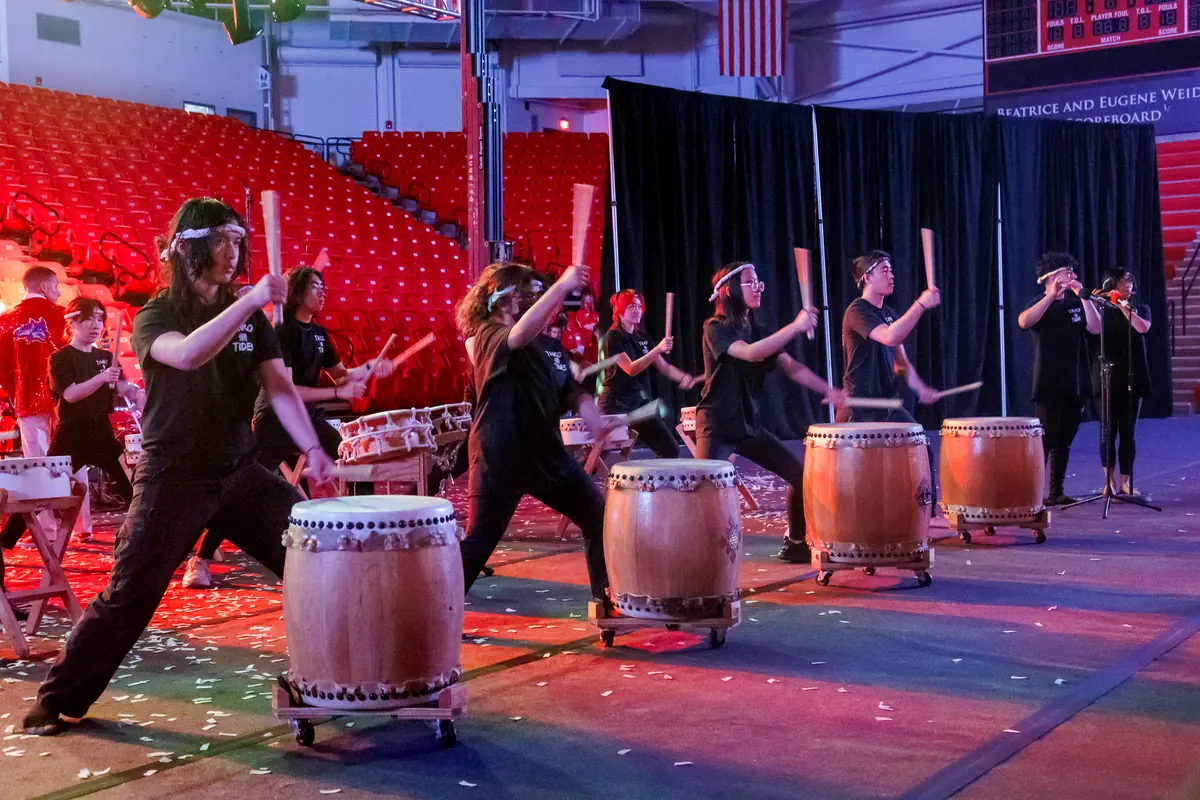
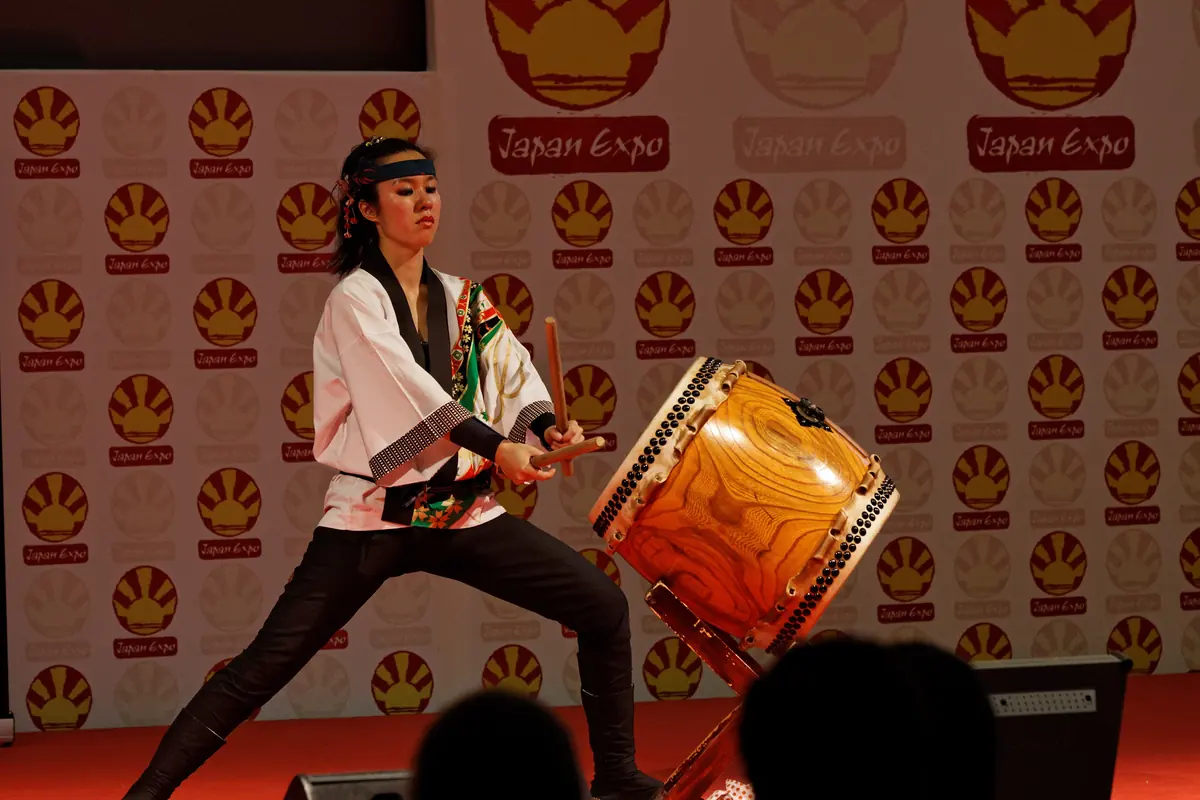
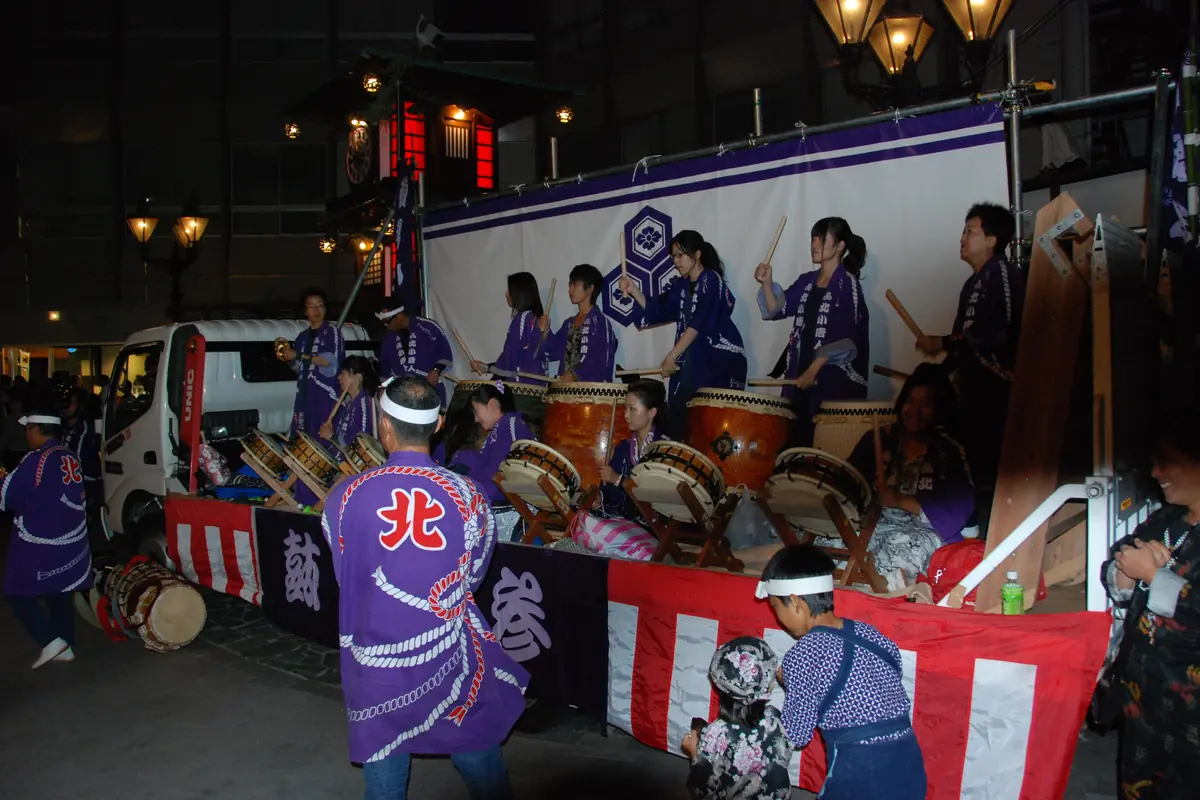
Photographs of taiko, the instruments and the Osaka waterfront. They show the art form and the district, not the show itself.

Before you walk in
Practical points for the entrance and the district around it.
Three ways to hear taiko
| Way | What it is | Who it suits |
|---|---|---|
| The UTAGE show · 45 minutes | A ticketed stage show that sets taiko, shamisen, shakuhachi and shinobue against electronic music, with guests invited on stage. | First-timers who want a compact, energetic evening beside Osaka Bay. |
| A festival · on festival dates | Teams play taiko and bells at shrine and street festivals in summer and autumn, such as the Kishiwada Danjiri. | Travellers whose dates match a festival and who like crowds and street energy. |
| A touring concert · on tour dates | A seated concert of classical-style ensemble drumming by a group such as Kodo, which tours Japan and abroad. | Drum purists who can plan around a tour. |
| Booking terms | Cancelling 24 hours ahead refunds the UTAGE ticket in full, and a date can be held without paying today. | Travellers whose plans may still change. |
Book the show
The UTAGE show comes first. A second Osaka ticket sits beside it for anyone who would rather have a wider modern spectacle than a taiko-led one. Pick a date to see start times and your total.
Taiko, shamisen, shakuhachi and shinobue set against electronic music, in a show next to Kaiyukan. Cancel free up to 24 hours before.
See dates and seats ↗A different Osaka show: samurai, kabuki, taiko and dance with dance music and lights, with interactive segments and some mature themes. Cancel free up to 24 hours before.
See dates and seats ↗More evenings in Osaka
Plan the night
The booking calendar shows the days and the start times. The time you choose is repeated in your confirmation, so check it there rather than trusting memory.
Arrive at least five minutes before the start. The door closes once the show begins, and a late arrival cannot be let in.
Take the Osaka Metro to Osakako Station and follow the Tempozan Marketplace signs towards the big Ferris wheel, as Kaiyukan's own access page describes.
The district has the Kaiyukan aquarium, the Tempozan Ferris Wheel and the Tempozan Marketplace, so the show fits a day on the waterfront. Check each attraction's own site for hours.
Guests can be invited on stage to try Japanese instruments, so wear something comfortable that you can move in.
Cancel the GetYourGuide ticket until a day before the show and you get everything back. A date can also be held without paying today.
Guides
FAQ
A modern taiko show that sets Japanese instruments against electronic music. The line-up named for it is taiko, shamisen, shakuhachi and shinobue, with staging and visual effects around the players.
The show on this ticket runs 45 minutes, and each date in the booking calendar has its own start time.
No. Entry closes once the show begins, for production reasons, and the ticket asks you to arrive at least five minutes before the start.
Guests can be invited up to try Japanese instruments and join one song for a limited time. It is part of the show, so it can't be promised for a given night.
No. The music carries the show, and reviewers mention English support. The booking page shows the language options for your date.
One reviewer calls it great for all ages, teenagers included. It is loud by nature, so think about very young children, and check the booking page for age limits.
The instruments are traditional and the music is modern. One guest calls it a modern rock take on taiko. For a classical ensemble concert, a touring group such as Kodo is the closer match.
A separate ticket covers a modern show that blends samurai, kabuki, ninja, taiko and dance. It includes mature themes, suggestive lyrics and revealing costumes, so read it in full before bringing a family.
Yes. Cancel up to a day ahead and the GetYourGuide ticket is refunded in full. You can also hold a date without paying today.
No. This site is a separate guide to the show. You book on GetYourGuide, and a link here may earn the site a modest commission at no cost to you.
Fares move with the date and the size of your group, and the total is converted into your currency before you confirm.