The instruments
Shamisen, shakuhachi, shinobue: a guide
The three non-drum instruments in a modern taiko show: what a shamisen, a shakuhachi and a shinobue are, how they sound and where they come from.
Book the taiko show ↗Quick answer
The shamisen is a three-stringed plucked instrument, the shakuhachi is an end-blown bamboo flute and the shinobue is a high-pitched transverse bamboo flute. Each has its own tradition: shamisen in kabuki and folk music, shakuhachi in Zen practice, shinobue in festival and theatre music. Together with taiko they give a show like UTAGE its melodic side.
The shamisen
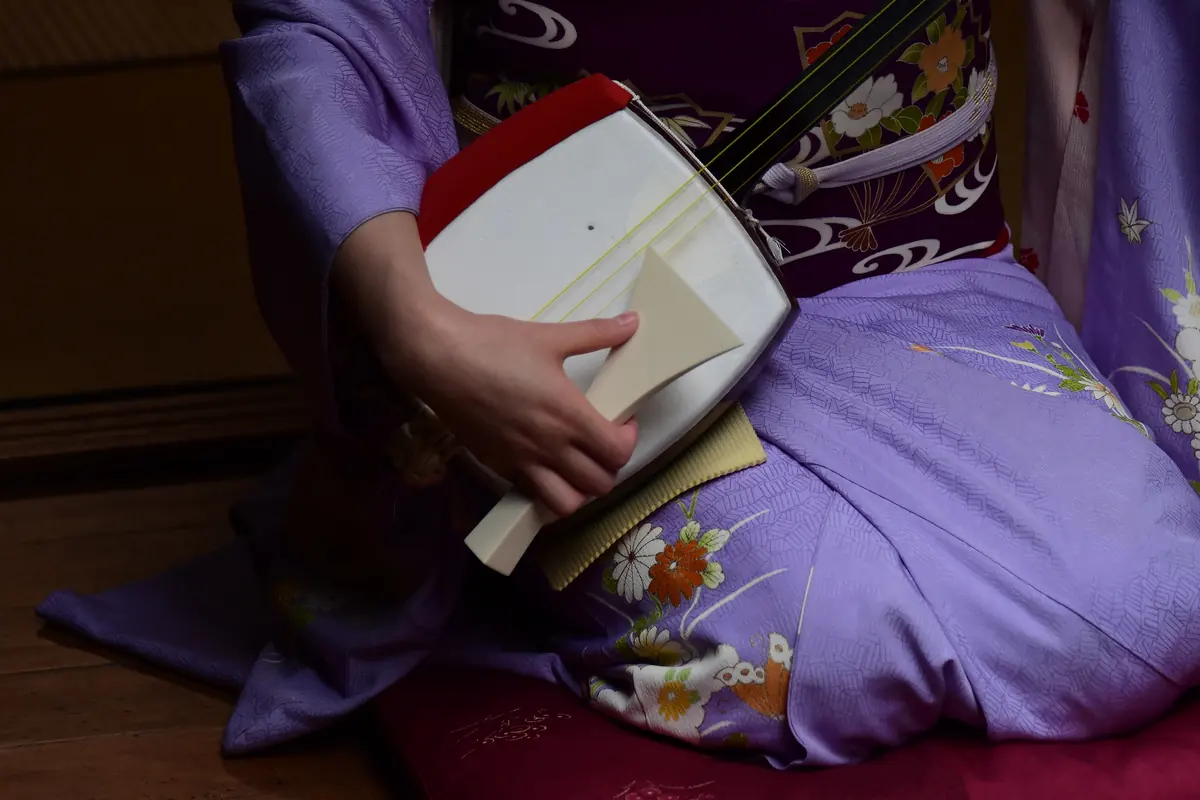
The shamisen, also called sangen, means three strings. It descends from the Chinese sanxian and is plucked with a large plectrum, also called a bachi. Its fretless neck is slimmer than a guitar's, and its body is a hollow drum-like frame covered in skin on both sides. The strings are silk or nylon, and modern instruments often use synthetic skins. There are three basic sizes, hosozao, chuzao and futozao, and genres such as nagauta, jiuta, min'yo and tsugaru each favour their own.
Why the shamisen buzzes
The lowest string is deliberately laid lower at the nut so that it buzzes, a characteristic timbre called sawari. Writers compare it to the buzz of the Indian sitar. It is the shamisen's signature sound, and it is why even a quiet shamisen has an edge. Different genres use different sizes: a thin-necked shamisen for kabuki, a thicker-necked one for puppet plays and folk songs, so the instrument you hear changes with the music.
From kabuki to rock
Shamisen genres include nagauta, used in kabuki, jiuta, folk songs and tsugaru. The tsugaru style has lent itself to modern use and is played in jazz and rock. Some inventors have even built tsugaru shamisen with electric pickups to use with amplifiers, as with an electric guitar. That history is useful context for a show that sets shamisen beside electronic music: the instrument has crossed into new styles before and sounds at home in them.
The shakuhachi
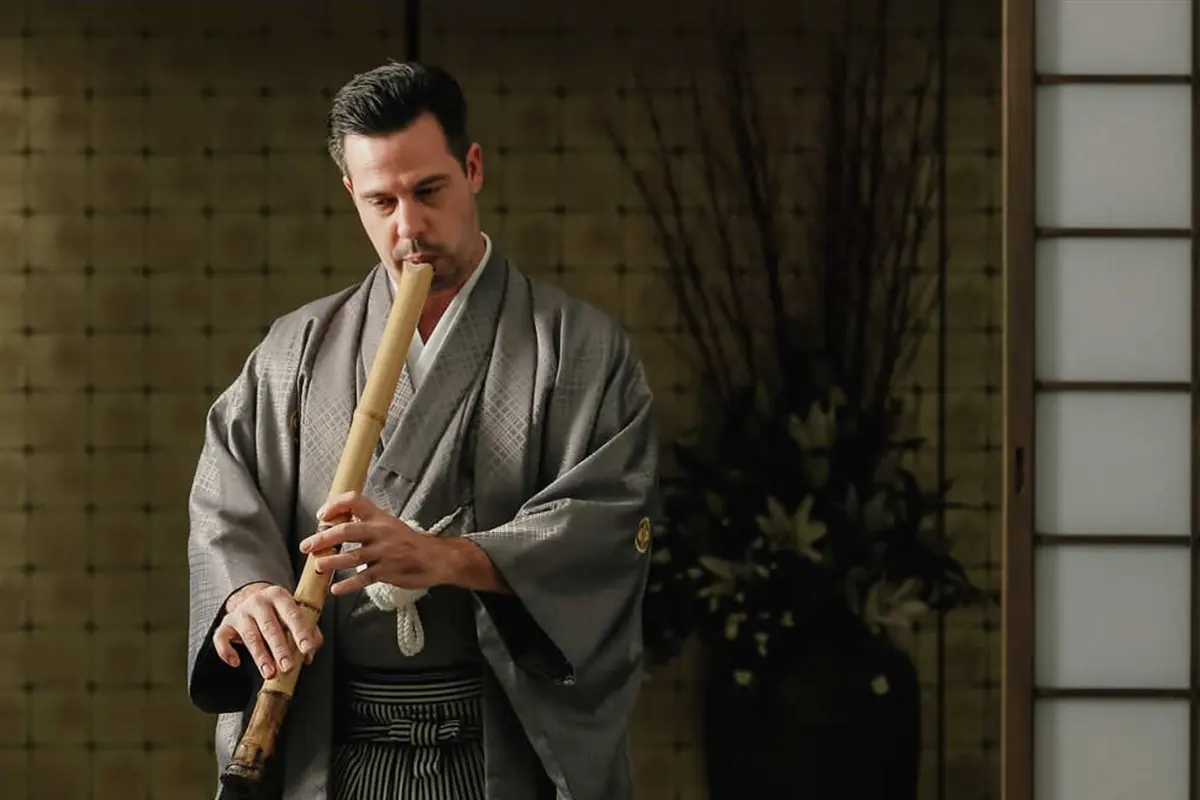
The shakuhachi is an end-blown bamboo flute, developed in Japan in the 16th century in the form now called fuke shakuhachi. The name means 1.8 shaku, which refers to its standard length of about 54.5 centimetres. It was used by monks of the Fuke sect of Zen Buddhism in suizen, or blowing meditation. The instrument is tuned to the minor pentatonic scale, and players can bend pitch by changing the blowing angle.
A flute that bends
Unlike a recorder, the shakuhachi has no fipple, so the player blows across a sharp edge, as across the neck of a bottle. That gives much more control: different fingerings, mouth shapes and partial hole covering can produce the same pitch with different colours. Professional players can produce almost any pitch, which is why the instrument works for Zen pieces, for ensemble music with koto and shamisen, for folk, and for jazz and modern music.
The shinobue
The shinobue is a high-pitched Japanese transverse flute, also called takebue in traditional arts. It is found in hayashi and nagauta ensembles, plays important roles in noh and kabuki music, and is heard in Shinto kagura and in folk songs. There are three styles: uta for songs, hayashi for festivals and doremi, tuned to the Western scale. Its high pitch makes it easy to pick out among the other instruments.
Listening to all four together
In taiko performance, a shamisen often accompanies drums in kabuki, and kumi-daiko pieces can also feature shakuhachi and shinobue. In a show like UTAGE, the melodic instruments share the stage with the drums and with electronic music. A useful way to listen is in layers, if the arrangement allows: the big drums give the pulse, the strings and flutes carry the melody above it, and the electronics add colour. You do not need to name each sound to enjoy it.
Frequently asked questions
Is a shamisen like a guitar?
It has a neck and strings across a resonating body, but it has three strings, a fretless neck and a skin-covered drum-like body, and it is played with a plectrum.
What does shakuhachi mean?
It means 1.8 shaku, referring to the flute's standard length of about 54.5 centimetres.
What is a shinobue used for?
It is used in festival ensembles, nagauta, noh and kabuki music, kagura and folk songs.
Sources